Unlock Your True Potential: Define, Measure, and Develop Your Emotional Intelligence (EQ) for Lasting Success
Why Emotional Intelligence?

Mark Russell
Head Performance Coach
In today's competitive business landscape, the secret to achieving superior performance lies within you and your team. Harnessing the power of EQ is essential for boosting both performance and profitability. But how can companies embark on the journey of EQ development?
Research has pinpointed 10 critical factors that underpin the most advanced EQ model—the Emotional Capital Model. These factors serve as the foundation of effective leadership. The initial step involves individually measuring and understanding the behavioural drivers behind these competencies.
This personalised insight is crucial for crafting targeted development action plans.
This is where the Emotional Capital Reports (ECR) become invaluable.
The ECR is the latest advancement in the scientific approach to measuring and enhancing Emotional Intelligence. Over 100,000 individuals have completed the ECR, which has been adopted by more than 3,500 organisations globally. It is a valid and reliable measurement of leadership potential based on Emotional Intelligence and enables you to assess an executive's key Emotional Intelligence skills and understand their leadership potential.
What are the Emotional Capital Reports?
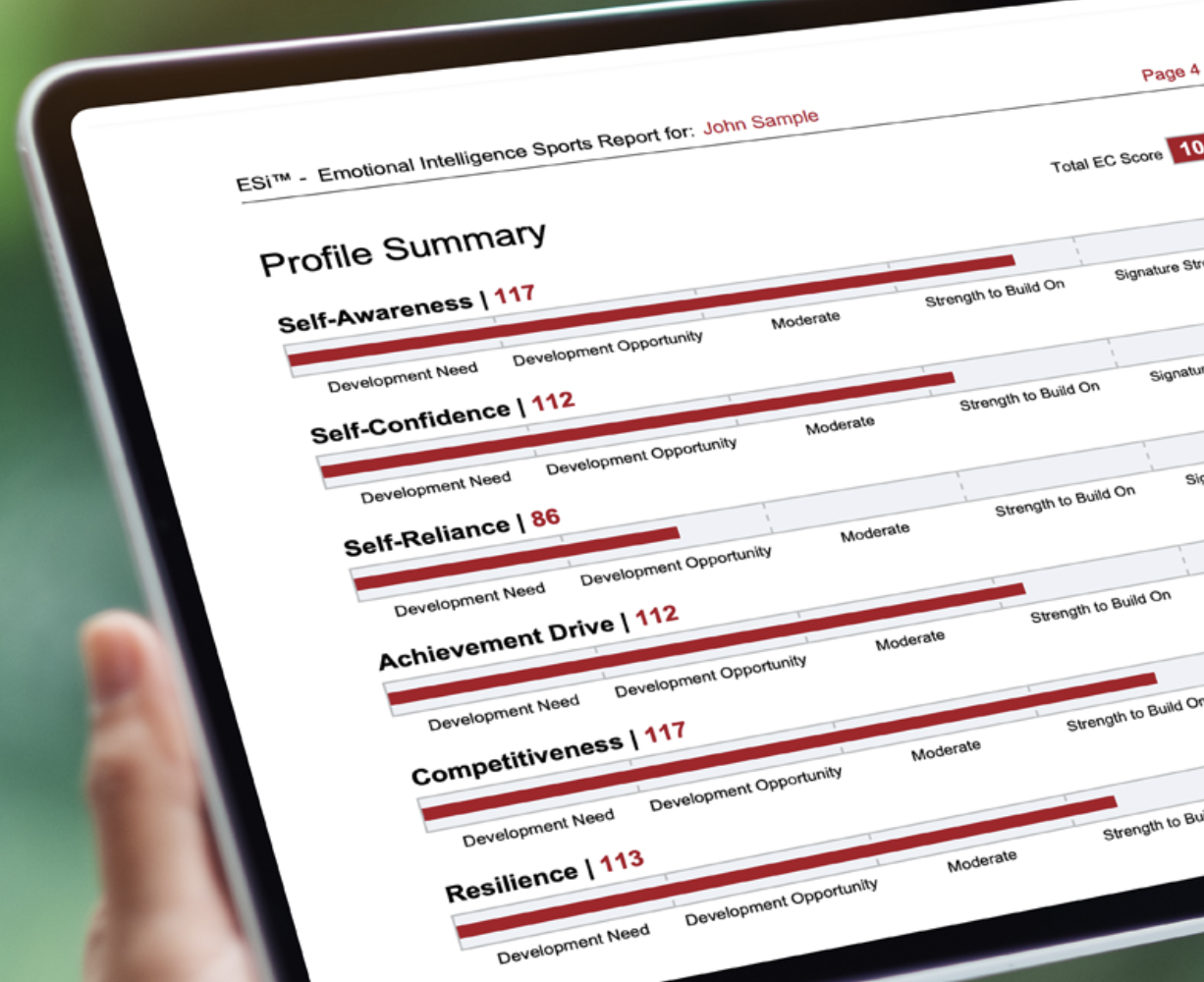
The Emotional Capital Report (ECR) gives you a reliable and effective evaluation of your EQ as compared against the world's top-performing leaders. It's an online psychometric assessment that measures leadership behaviours against 10 emotional and social competencies linked to effective leadership. There are currently four different types:
The ECR Self
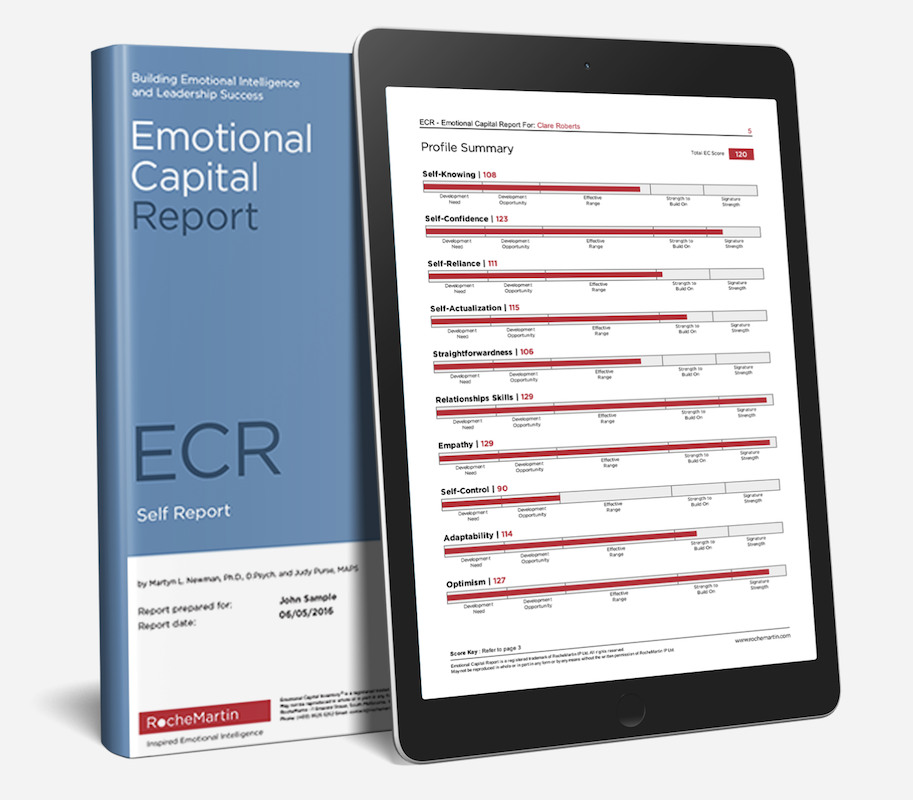
The ECR Self assessment includes:
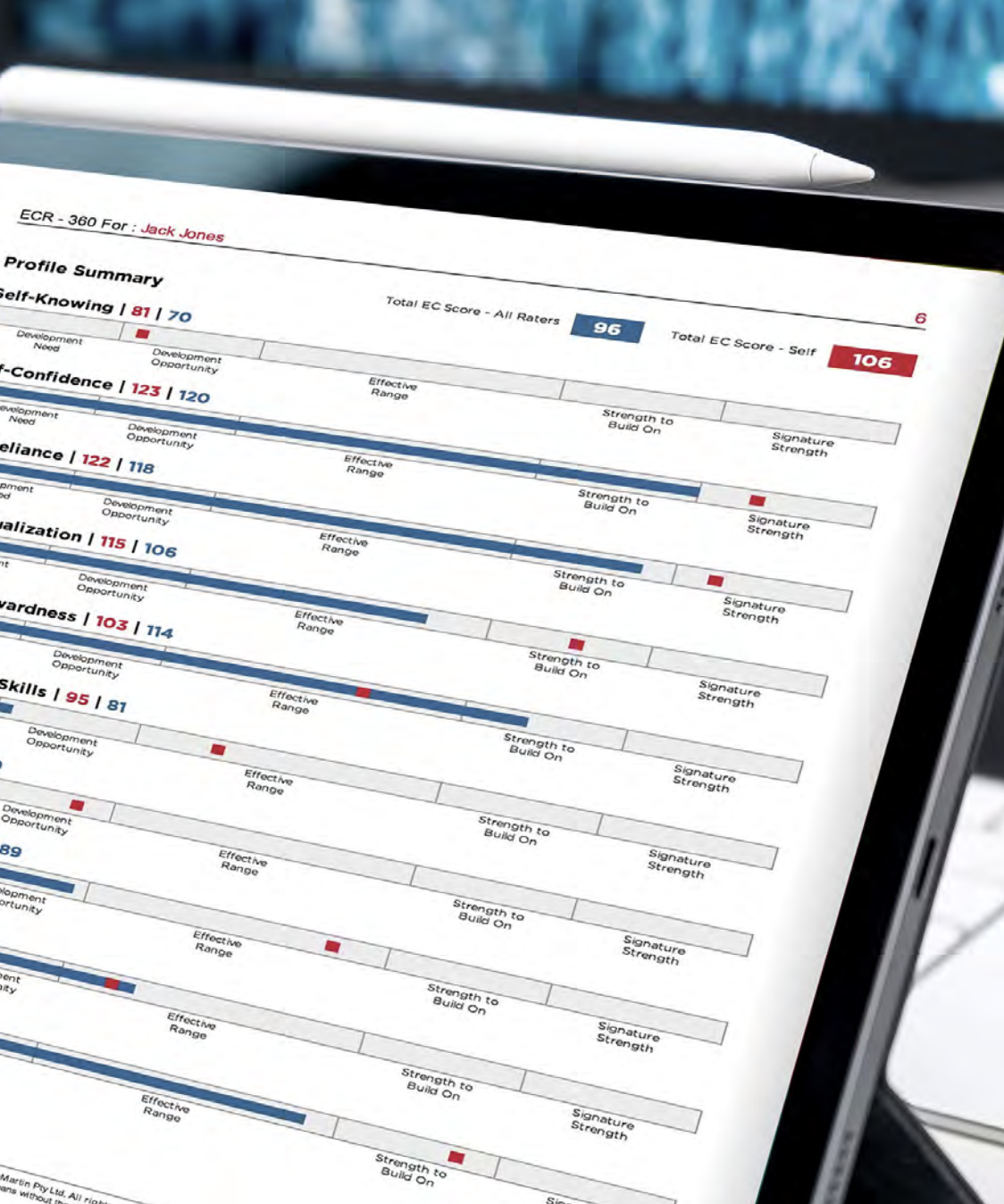
The ECR 360™
The ECR 360™ Multi-Rater Report employs a comprehensive evaluation approach to provide a well-rounded perspective on performance, making it perfect for leadership development programmes, executive coaching, and personal growth.
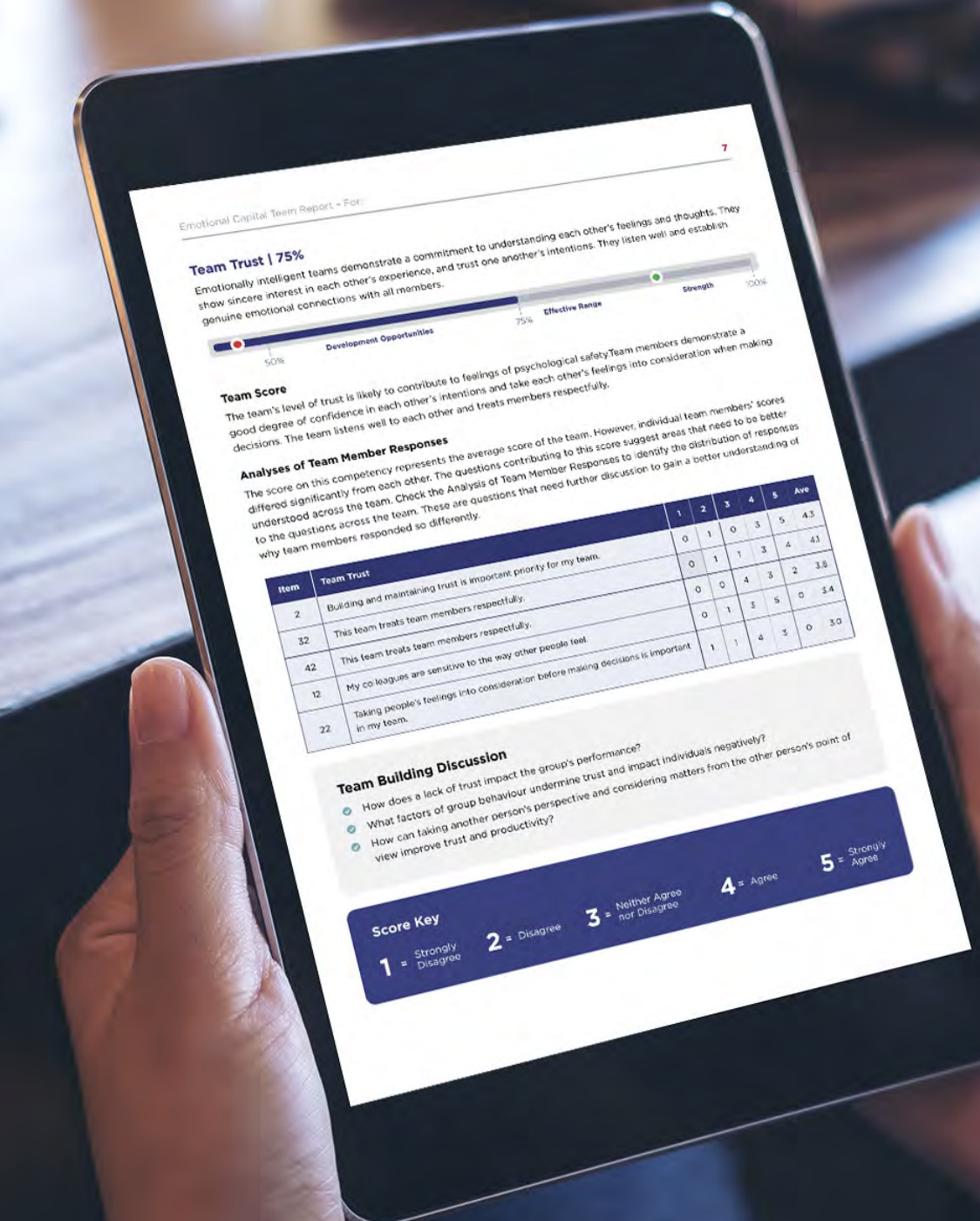
The ECR Teams
Mastering and enhancing EQ empowers teams to perform at their highest level. The ECR Teams Report evaluates and cultivates the competencies necessary to foster the three motivational states linked to team effectiveness.
The ECR Selection
The ECR Selection Report assists in identifying talent and selecting high-performing employees.

In addition to providing scores for the 10 competencies, it also includes:
The 10 Key Competencies Measured by the ECR
INNER Focus
It helps us recognise and control our emotional challenges and communicate openly.
Self-Knowing
Recognising how your feelings impact on your opinions, attitudes and judgments.
Self-Control
Being able to control your emotions and show restraint until you have had the time and space to think in a detached and rational manner.
Self-Confidence
Being able to accept and respect yourself as you are.
Self- Reliance
Being able to plan, make decisions and take responsibility with relative comfort and ease (i.e. you don’t need others to verify your actions).
OTHER Focus
Enhancing our capacity to influence others through positive interpersonal relationships.
Empathy
Being aware of, understanding and appreciating the feelings of others’ thoughts and feelings.
Relationship Skills
Being able to build collaborative, positive relationships where both parties benefit.
Straightforwardness
Communicating feelings, thoughts and beliefs in a clear, open manner.
OUTER Focus
Enabling us to respond creatively and effectively, rather than defensively.
Optimism
Being able to sense opportunities and focus on what can be achieved and bounce back quickly from setbacks.
Self-Actualisation
Learning to manage emotional energy in order to maintain an enthusiastic commitment to long-term goals.
Adaptability
A key skill to develop in any workplace - especially at times of uncertainty and doubt - adaptability is your capacity to react well to change, be open to new ideas, and adjust your emotions, thoughts and behaviours.
Scientific Rigour and Reliability behind the ECR
The psychometric properties behind the ECRs have been scientifically assessed to ensure accuracy and dependability.
#1
Normative Data
The base data is drawn from various occupations and several countries. This diversity enhances the ECR's representativeness and applicability across professional and cultural contexts.
#2
Standard Scores
An individual’s raw scores are evaluated against the benchmarking database to generate a standardised score, allowing for comparisons across both individuals and professional groups.
#3
Age & Gender Effects
The ECR can assess the results against different age groups and genders. This enables the report to account for significant score variations due to age and gender, ensuring more personalised and relevant results.
#4
Consistency
The ECRs have been administered repeatedly over time to a diverse group of individuals, and the results demonstrate high coefficient reliability, ensuring that they are both consistent and accurate.
#5
Reliability & Validity
Research on the ECR has been published in scientific, peer-reviewed journals, ensuring the accuracy and consistency of data and the trustworthiness of conclusions drawn from that data. The ECR shows minimal measurement error which confirms that the 10 competencies are grouped well together.
#6
ECR & Leadership
The ECRs effectively identify individuals regarded as leaders by their peers. The reports provide valuable insights into leadership potential, aiding in identifying and developing future leaders.
Why Emotional Intelligence Helps?
Emotional intelligence contributes to a more well-rounded, mentally resilient executive, capable of thriving in the demanding business environment. Being emotionally intelligent can significantly enhance an executive's performance in several ways:
Emotional Regulation
It helps you manage stress and maintain composure under pressure, allowing you to perform consistently even in high-stakes situations.
Self-Awareness
By understanding your own emotions, you can better recognise your strengths and weaknesses, leading to more focused training and performance improvement.
Empathy and Team Dynamics
Emotional intelligence fosters better communication and understanding among colleagues, enhancing teamwork and collaboration in the workplace.
Flexible
It equips you to bounce back from setbacks and maintain a positive mindset, which is crucial for overcoming challenges and staying motivated.
Decision Making
Being emotionally intelligent can help you be more rational and make strategic decisions during a game, as you are less likely to be swayed by emotions like frustration or anger.
Adaptability
Emotional intelligence can help you adapt to business dynamics and strategies, making you more versatile and responsive to rapidly changing situations.

"Emotional Intelligence is the key that unlocks an executive's potential, transforming leadership from effective to exceptional by fostering deeper connections, insightful decision-making, and resilient adaptability."
Mark Russell
What are the practical applications of the ECR?
Leadership Development

Extensive scientific research has shown that the most successful leaders possess high Emotional Intelligence (EQ) levels. Why is this the case? They can forge more effective professional relationships, comprehend their colleagues' motivations, and engage in challenging conversations that yield positive outcomes.
These competencies are founded on fostering the Emotional Intelligence behaviours that encourage peak performance.
The ECR allows organisations to evaluate leaders based on 10 key competencies, facilitating the development of essential skills that enhance overall business performance. This leads to a more open-minded, collaborative, and productive team.
Empowering Sales Teams

Technology has transformed the traditional sales process by granting customers greater access to product information and industry insights. In this new landscape, mere product knowledge and a compelling sales pitch are insufficient. Today, the emotional experience associated with purchasing from a vendor has become as important—if not more so—than the products and their pricing.
Sales professionals must manage their own emotions effectively and skillfully navigate and influence their customers' emotions to secure the sale.
The ECR enables businesses to understand and modify behaviours, equipping sales teams to sell with greater confidence and effectiveness. By focusing on emotional intelligence, sales professionals can enhance their interactions, improve customer relationships, and increase sales success.
Attracting and Retaining Top Talent

Leaders within organisations begin by establishing a culture rooted in the purpose and values they uphold. If successful, this culture is then effectively manifested through a clear set of behaviours that work to attract, retain, and motivate top performers.
Utilising the ECR to enhance leaders’ social and emotional competencies fosters an appealing and inspiring environment for the existing talent and potential recruits that the company seeks to engage.
Diversity and Inclusion

For a team to function effectively, its members must first experience psychological safety with one another, which fosters cooperation. This is accomplished by creating an environment dedicated to understanding and appreciating each individual.
Team members must feel secure enough to avoid taking the lead when they recognise that someone else might be more capable. This necessitates trust that can only be built through high emotional intelligence (EQ).
The ECR promotes self-awareness and guides development in areas that require improvement, resulting in a more open-minded, collaborative, and ultimately more productive team.
Cultural Transformation

Culture starts with a company's purpose and values, vital for motivating employees and fostering a positive, productive environment. While leaders are responsible for shaping culture, a frequent challenge is translating these values into actionable behaviors and embedding them into the company culture so that they define the "way we do business."
While creating behavioural frameworks is beneficial, it is essential to include a practical component that demonstrates to employees how to cultivate those behaviours.
The ECR offers a robust platform for operationalising key behaviours, and its compelling framework effectively engages individuals to make the personal commitment required for meaningful change.
Wellness and Well-being

From a psychological perspective, almost all mental health issues stem from difficulties in managing and regulating emotions. Distressing and overwhelming emotions are particularly central to mood and anxiety disorders, as well as conditions like ADHD. Emotional Intelligence (EQ) emphasises emotional regulation and is one of the most effective frameworks for cultivating supportive workplace cultures.
Research examining the relationship between EQ and mental health using the ECR has demonstrated that individuals' total EQ scores positively correlate with their ability to cope with daily demands and pressures. Essentially, the ECR functions as a tool for quantitatively assessing individuals' overall well-being, highlighting its significance in promoting mental health and effective emotional management in the workplace.
What distinguishes the ECR as the most sophisticated EQ assessment globally?

Who uses The ECR?
The ECR is the Emotional Intelligence tool of choice for many of the world-leading companies, including:

Want to work with me?
Get in touch.
We need your contact information so we can contact you about our products and services. You may unsubscribe from these communications at any time. For information on how to unsubscribe and our privacy practices and commitment to protecting your privacy, check out our Privacy Policy
Read What Clients Say About My Work...
"Next Level mindset"
Skills, physicality and tactical ability are key to playing sports well. But I know mindset is essential, too, especially for elite athletes. That’s why I’d recommend Mark to any coach or athlete who wants to take performance to the next level.

Steve Shortland, Director of Sport & former England U16 Rugby Coach Wellington College, Crowthorne in Berkshire
"Developing Mindsets"
Mark’s work helps athletes develop an awareness mindset that allows them to recognise the controllable whilst playing in an International arena.

David Muckalt, Director of Sport St Bede's College in Manchester
"Perform consistently"
Mark’s workshops and programmes help your athletes develop that mental edge to perform consistently and deliver even under pressure.

Martin Pepper, Assistant Head of Barnard Castle School, Teesdale in County Durham
OptimizePress Popup Overlay

Free Download
Now sign up to 'Mark's Musings' and get FREE Special Report
Enter your name and email to download "Special Report: 7 Easy Ways To Transform Your Mental Toughness"
We process your personal data as stated in our Privacy Policy. You may withdraw your consent at any time by clicking the unsubscribe link at the bottom of any of our emails.